


Retro Goal
4.04.29K Reviews
App Specs
- Version
- 1.1.2
- Updated On
- License
- Free
- Downloads
- 1,000,000+
- Developer
- New Star Games Ltd
- Categories
- Sports
- Platform
- Android
Screenshots
 Analysis by AppCompare
Retro Goal is the kind of football game I can open for a short break and still feel that I have played a complete match by the time I put my phone down. New Star Games Ltd keeps the presentation deliberately compact, with a retro visual identity and a quick route from the menu to the pitch. That simplicity is the main attraction, but it also sets expectations: this is not trying to replace a full simulation with exhaustive team management or a huge collection of licensed details. It is a lighter, more immediately playable take on football.
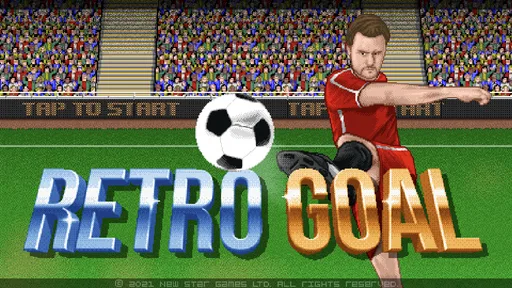
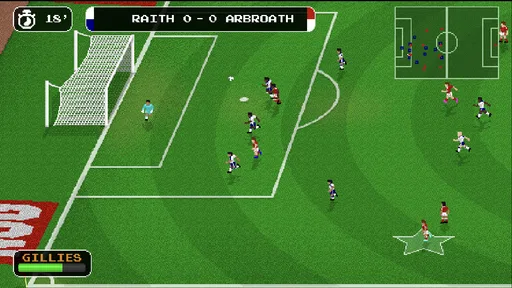
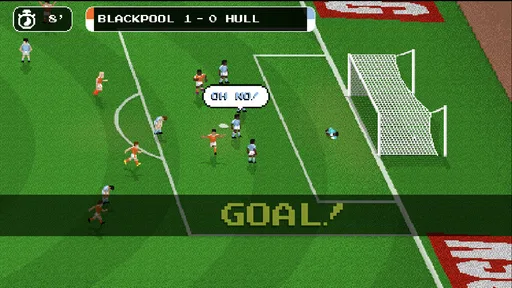
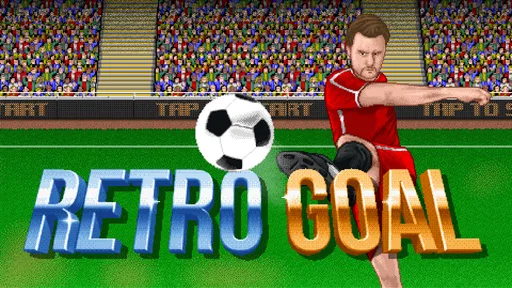
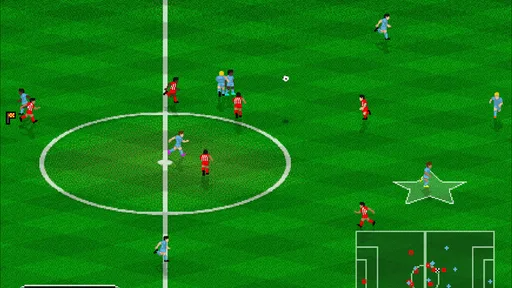
My first impression was that the game understands the value of restraint. The screen does not need to be crowded to make a match feel active. Players, the ball, the goal, and the next decision are easy to read, while the old-school style gives the whole experience a clear personality. The store summary calls it a 90s-style football game, and that idea comes through in the way the game favors recognizable shapes and direct action over visual excess.
It is free to start and suitable for Everyone, which makes it easy to recommend as a casual sports game for a broad audience. It has passed the one-million-install mark and holds a 4.0 average from around thirty-six thousand ratings, so there is a substantial audience already using it. I would still describe it as a game for people who enjoy quick decisions and a bit of repetition, rather than for players looking for a highly detailed football simulator.
A compact football world with a clear visual identity
I like how the game’s compact look makes its priorities obvious: read the pitch, choose a move, and live with the result. In this section, I’ll focus on how that visual restraint shapes the first few matches and why it suits quick phone sessions, while also considering what players give up if they prefer a more realistic football presentation.
The first session tells you what kind of game this is
The opening experience is refreshingly direct. Instead of asking me to learn a dense collection of systems before I can enjoy a match, Retro Goal gets to the football quickly. That matters on a phone, where a game often competes with a message, a commute, or a few spare minutes before an appointment. The presentation makes the pitch feel like the center of the experience, not merely one screen inside a complicated management package.
The retro art direction does more than create nostalgia. It gives the game a consistent visual language. Players are readable because they are not buried beneath realistic textures, dramatic camera effects, or unnecessary decoration. The result is a style that feels intentional rather than underpowered. I can understand the action at a glance, which is especially useful when the ball changes direction quickly or several players move into the same area.
That clarity also affects the mood. A realistic football game can make every match feel like a broadcast, while this one feels closer to an interactive football memory: the important parts are the pass, the run, the shot, and the reaction to what happens next. The simplified look leaves room for my imagination without making the action vague. I know where I am, what I am trying to do, and why a mistake happened.
Worth Reading Before You Choose

Google Maps Gets You There, Until the Map and the Moment Disagree

Square Team Under Pressure: Can It Recover When Workflows Break?

Yandex Weather Makes Rain Forecasts Practical

McDonald’s App Builds Community Through Shared Routines, Not Social Feeds

Royal Kingdom Makes Match-Three Feel Like Progress

EA SPORTS FC Mobile 26 Is a Bigger Football Game, but It Takes Time
Why the 90s influence works on a modern phone
The retro setting is not just a filter placed over ordinary mechanics. It supports the game’s short-form design. A more elaborate presentation would create an expectation of deeper realism, but the pixel-inspired approach signals that the pleasure is in controlling the moment. It also helps the game avoid aging badly. A deliberately old-school style does not need to compete with the latest console graphics, because its appeal comes from proportion, color, movement, and recognizable football situations.
I particularly like how this visual choice makes the game approachable for someone who does not normally play sports titles. The pitch is not intimidating, and the overall screen feels less like a technical dashboard. A friend who wants “a football game, but not a serious simulation” is exactly the person I would point toward this one. The trade-off is that anyone expecting lifelike animations, detailed stadium presentation, or the visual spectacle of a premium console release will find the style intentionally limited.
There is also a practical benefit to the compact presentation: it keeps my attention on timing. I am less tempted to watch the screen as a passive spectacle and more likely to think about the next action. That turns the art direction into part of the control experience. The game looks simple, but the simplicity helps me notice the decisions that matter.
The world is strongest when it stays focused
Retro Goal creates its football world through tone rather than a large amount of exposition. I do not need a long explanation to understand the fantasy. I am here to build momentum, play matches, and deal with the consequences of how I approach them. That lets the game maintain a brisk pace and avoids the feeling of being trapped in menus before the sport begins.
For everyday use, this focus is valuable. I can play a match while waiting for food, take a short session during a train journey, or return to it after several days without needing to relearn a complicated interface. The game’s identity remains easy to recognize after a break. That is one of its less obvious strengths: it respects the memory limits of a casual player.
At the same time, the focused world may feel thin to players who need a strong sense of place, extensive customization, or a deep off-pitch narrative. If your favorite part of a football game is building a detailed club ecosystem, studying player data, or recreating real-world leagues, this is unlikely to satisfy you in the same way as a larger management or simulation game. Retro Goal works best when the match itself is the reason you opened it.
Sound gives the matches their forward motion
The audio presentation supports the same compact mood as the visuals. Rather than making the game feel like a full television broadcast, it helps reinforce the rhythm of play. The sound belongs to the action: moments of pressure, a promising move, and the release of a successful attempt all feel connected to the pace on screen. I do not experience it as a separate layer competing for attention.
This matters because football games can become strangely flat when every attack feels identical. Here, the combination of quick visual feedback and energetic sound encourages me to keep thinking forward. Even when I lose the ball, the match does not feel like it has stopped. I am already considering how to recover, change the next pass, or avoid repeating the same mistake.
There is a useful trade-off in this approach. The audio helps create momentum, but it is not the reason to play the game with headphones. Players searching for a rich stadium atmosphere, extensive commentary, or a highly realistic match-day soundscape should look elsewhere. I see the sound as functional and mood-setting rather than a headline feature. It does its job by making the game feel lively without slowing it down.
How the rhythm changes the way I play
The best sessions have a clear rise and fall. I start by reading the space, become more aggressive when an opening appears, and then have to react if the move breaks down. That rhythm is more important than any single visual detail. The game feels satisfying when I stay patient long enough to create a chance, but it also rewards quick reactions when the situation changes.
One practical tip is to avoid treating every possession as an invitation to attack immediately. The retro presentation can make the action feel arcade-like, yet the most enjoyable moments come from balancing urgency with control. I get better results when I use the early part of an attack to identify where the pressure is coming from instead of forcing the first available option. This is a small adjustment, but it makes the matches feel less random and gives victories more personal meaning.
The controls reward intention more than button memorization
Retro Goal’s mechanical appeal comes from the gap between simple input and meaningful outcome. The controls are approachable, but a straightforward action can still lead to different results depending on timing, direction, and the position of the players around me. That is the right kind of simplicity for a mobile football game. I can understand the basic interaction quickly, then spend later sessions improving how I use it.
The important skill is not learning a huge command list. It is learning when to make a pass, when to take a risk, and when to protect an attack from collapsing. That makes the game a good fit for players who want football decisions without the workload of a full simulation. It also gives experienced sports-game players something to refine, even though the overall presentation remains accessible.
A useful workflow is to treat each attack as a short chain rather than a single move. First I look for a safe way to keep possession, then I try to move the defense, and only after that do I commit to the more dangerous option. This approach makes the game feel more deliberate and reduces the frustration of losing the ball through impatience. It is the kind of lesson that does not appear in a store description but becomes clear after several matches.
Where the mechanics fit casual play, and where they do not
The mechanics fit short sessions because they keep the focus on recognizable football problems. I can play without preparing a long strategy, and the retro style means I am not waiting for elaborate animations before the next decision. That makes the game a strong choice for a lunch break or a quick evening session when I want interaction rather than passive entertainment.
However, the same accessibility can become a limitation for players who want a deep simulation of football. If you want detailed tactical instructions, highly granular player roles, or the feeling that every real-world football variable is represented, a larger simulation will offer more room to experiment. Retro Goal is better understood as a focused arcade-management blend than as a replacement for the most comprehensive sports titles.
The game also asks the player to accept repetition as part of its appeal. Its loop becomes enjoyable when I want to improve my decisions and see how a campaign develops, but someone who needs constant novelty may run out of surprises sooner. I would skip it if my main goal were a one-time cinematic experience or a realistic recreation of professional football. I would choose it when I want a familiar structure that becomes more satisfying as I learn its timing.
Free entry and optional spending
Because the game is free, trying it requires little commitment. That is a major advantage for anyone unsure whether a retro football format will work for them. The current version is 1.1.2, and the game supports Android devices starting with version 5.0, making it accessible across a wide range of older and newer phones. The practical question is less whether it is easy to begin and more whether its focused loop matches your expectations.
Optional purchases range from $2.49 to $10.99 per item. I would approach them as convenience or support choices rather than as a reason to install the game. Before spending, I would first play enough matches to find out whether the core rhythm is enjoyable without extra additions. That is especially important here because the game’s value comes from its moment-to-moment decisions; no purchase can replace the need to enjoy that basic loop.
For a younger player, the Everyone rating makes the game broadly approachable, but I would still encourage a parent to review the purchase settings on the device. That is ordinary good practice for any free game with optional spending. The game’s accessible style makes it easy to hand to someone else, so keeping control of purchases matters more than the simple presentation might suggest.
Who will get the most from it
I think Retro Goal is strongest for three kinds of players. The first is someone who remembers older football games and wants that compact, immediately understandable feeling on a phone. The second is a casual player who wants matches that can fit around daily life. The third is a sports fan who enjoys improving through repetition but does not want to study a complicated simulation before having fun.
A realistic scenario is a short commute. I can begin a session with no elaborate preparation, play with a clear objective, and stop when I reach my destination without feeling that I have abandoned a huge tactical plan. Another good use is a shared phone moment: the visual language is easy to understand, so a friend can watch a match and quickly recognize the important action even without knowing every system.
I would be more cautious about recommending it to someone who wants official realism, a massive roster database, or an authentic broadcast presentation. I would also point simulation fans toward a deeper alternative if they care more about long-term tactical control than immediate match flow. Retro Goal is not failing when it leaves those things out; it is choosing a different priority. The question is whether that priority matches yours.
How it compares with the usual football alternatives
Compared with large football simulations, this game is easier to enter and faster to understand. You spend less time managing layers of detail and more time responding to what is happening on the pitch. That makes it a better companion for short sessions, while the larger alternatives remain stronger for players who want realism, licensed presentation, and extensive tactical depth.
Compared with a pure arcade football game, Retro Goal feels more invested in the idea of progression and consequence. It is not only about producing spectacular moments in isolation. The surrounding structure gives individual matches a reason to matter, even though the presentation stays light. That middle ground is the game’s most appealing position: more purposeful than a quick score-chasing title, but less demanding than a full management simulation.
Compared with a football manager game, it offers a much more immediate relationship with the action. I am not simply reviewing numbers or waiting for results; I am involved in the key moments. The trade-off is that I get less room for detailed planning away from the pitch. Players who enjoy spreadsheets, long-term squad construction, and constant optimization may find the experience too streamlined.
Small habits that make the game more enjoyable
I found that playing with a clear intention produces better sessions than rushing through every match. Before an attack, I try to identify whether I am building patiently or looking for a quick opening. Switching between those approaches keeps the rhythm varied and helps me understand why a move succeeded. It also prevents the common mobile-game habit of repeating the same input and blaming the result when the situation has changed.
Another useful habit is to pay attention to the shape of the play rather than focusing only on the player carrying the ball. The retro visuals make this possible because the screen is uncluttered. I can watch for space developing elsewhere and prepare the next action earlier. This is where the simple art direction becomes a genuine gameplay advantage: less visual noise gives me more time to read the whole situation.
I also recommend treating short sessions as practice rather than judging the game after one rushed match. The first few minutes show whether the style appeals to you, but the deeper satisfaction comes from recognizing patterns. Once I stop expecting every attack to work, mistakes become useful feedback. That shift is important for anyone who normally dismisses retro sports games as too basic.
The atmosphere holds together because every part serves the same idea
The art, sound, setting, and pacing all point in one direction. The visuals simplify the pitch, the audio keeps the action moving, and the structure gets me back to football quickly. None of these elements tries to turn the game into something more realistic than it is. Instead, they create a coherent mood built around quick decisions, familiar football drama, and the pleasure of improving through repeated play.
That coherence is more valuable than a long feature list. I never feel that a realistic presentation has been placed on top of shallow interaction, because the retro identity prepares me for a more focused experience. At the same time, the game is not so minimal that the matches become disposable. The balance works when I want a sports game with personality but limited friction.
There are clear boundaries. The visual style will not satisfy everyone, the audio is more supportive than immersive, and the streamlined mechanics cannot provide the depth of a major simulation. Optional purchases also mean I would take a moment to understand what I am paying for before committing. Those are fair limitations to consider, especially if you already know that you prefer realism or extensive customization.
My final recommendation
After spending time with it, I see Retro Goal as a confident mobile football game that knows exactly how much detail it needs. New Star Games Ltd has built the experience around a recognizable retro mood, but the nostalgia does not overwhelm the play. The visual language keeps the action readable, the sound gives matches a useful pulse, and the pacing makes it easy to fit into ordinary routines.
The best reason to play it is the connection between its style and its mechanics. The game is not merely wearing a retro costume; its compact presentation supports faster reading, shorter sessions, and a more direct relationship with each decision. That makes it especially appealing when I want football without the preparation and commitment demanded by a full simulation.
I would recommend it to casual sports players, fans of old-school football design, and anyone looking for a free game that can provide a meaningful match in a limited amount of time. I would skip it in favor of a deeper alternative if I needed realistic leagues, exhaustive tactics, or broadcast-level atmosphere. For everyone else, Retro Goal is an easy game to try and a surprisingly thoughtful one to keep installed when the mood calls for quick football with a distinct personality.
Pros
- Simple controls make matches easy to pick up on mobile.
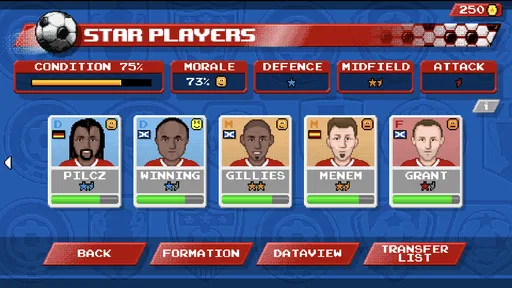
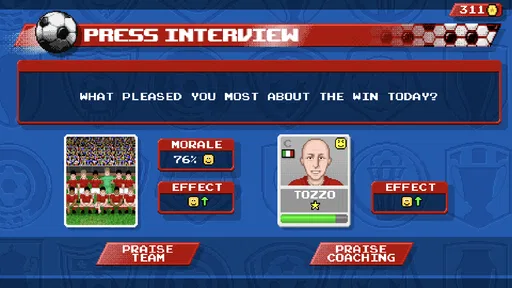
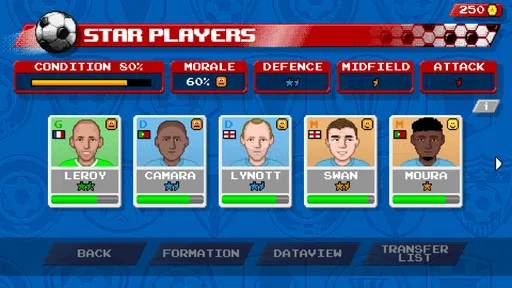
- Career mode combines quick games with team management decisions.
- Retro visuals and chiptune-style audio create strong nostalgic appeal.
- Matches are short
- making it suitable for quick gaming sessions.
- Team upgrades and transfers add progression beyond the on-field action.
Cons
- Limited tactical depth may disappoint experienced football simulation fans.
- Some advanced features require in-app purchases or the premium version.
- Player animations can feel repetitive after extended play.
- The retro presentation may seem too basic for players wanting realistic graphics.
- Difficulty balance can become uneven as career progression advances.
FAQs for Retro Goal
What is Retro Goal, and what kind of gameplay does it offer?
Retro Goal is an arcade-style football game that combines fast, accessible matches with light team-management features. Instead of aiming for a highly realistic simulation, it focuses on quick controls, dramatic attacking plays, retro-inspired visuals, and a satisfying sense of progression. You can pass, shoot, and score during matches, while also managing aspects of your club between games.
Is Retro Goal free to download and play?
Retro Goal can generally be downloaded for free, but availability and pricing may vary depending on your device and region. The free version may provide access to part of the experience, while additional content or the complete game can require a one-time purchase or in-app payment. Check the Google Play Store or App Store listing before downloading to confirm the current terms.
Does Retro Goal require an internet connection?
Retro Goal is designed primarily as a single-player experience, and many of its core features can be enjoyed without a constant internet connection. This makes it suitable for playing during travel or when you have limited data access. However, your store account, updates, purchases, advertisements, or certain platform services may still require an internet connection.
Is Retro Goal suitable for beginners who do not usually play football games?
Yes. Retro Goal is relatively easy to pick up because its controls are built around simple gestures and straightforward actions rather than a large number of complicated buttons. New players can quickly learn how to pass, shoot, and create chances, while experienced players can improve their timing and decision-making. The management elements add depth without overwhelming beginners.
What are the main advantages and limitations of Retro Goal?
The main advantages of Retro Goal are its charming retro presentation, responsive arcade-style gameplay, short matches, and combination of football action with club management. It is entertaining without demanding long sessions. Its limitations are equally important: players seeking licensed teams, highly realistic graphics, advanced tactical systems, or a full multiplayer experience may find it less satisfying than a traditional football simulation.


